
Programmable DC Power Supplies by Test Application
Bench power decisions get easier when you start with the measurement, not the model number. The MPS-100 Series provides a pure-linear precision dc power source for signal-sensitive experiments, while its programmable regulator power supply capability lets production, teaching, and endurance teams build repeatable output profiles.
Low Noise, High Resolution for Sensitive Experiments
The engineering challenge
When a prototype is measuring microvolt-level signals, a sluggish or noisy rail can hide the real behavior of the circuit. R&D engineers need an output that stays clean at every set point — and fine enough resolution to characterize a design without guesswork.
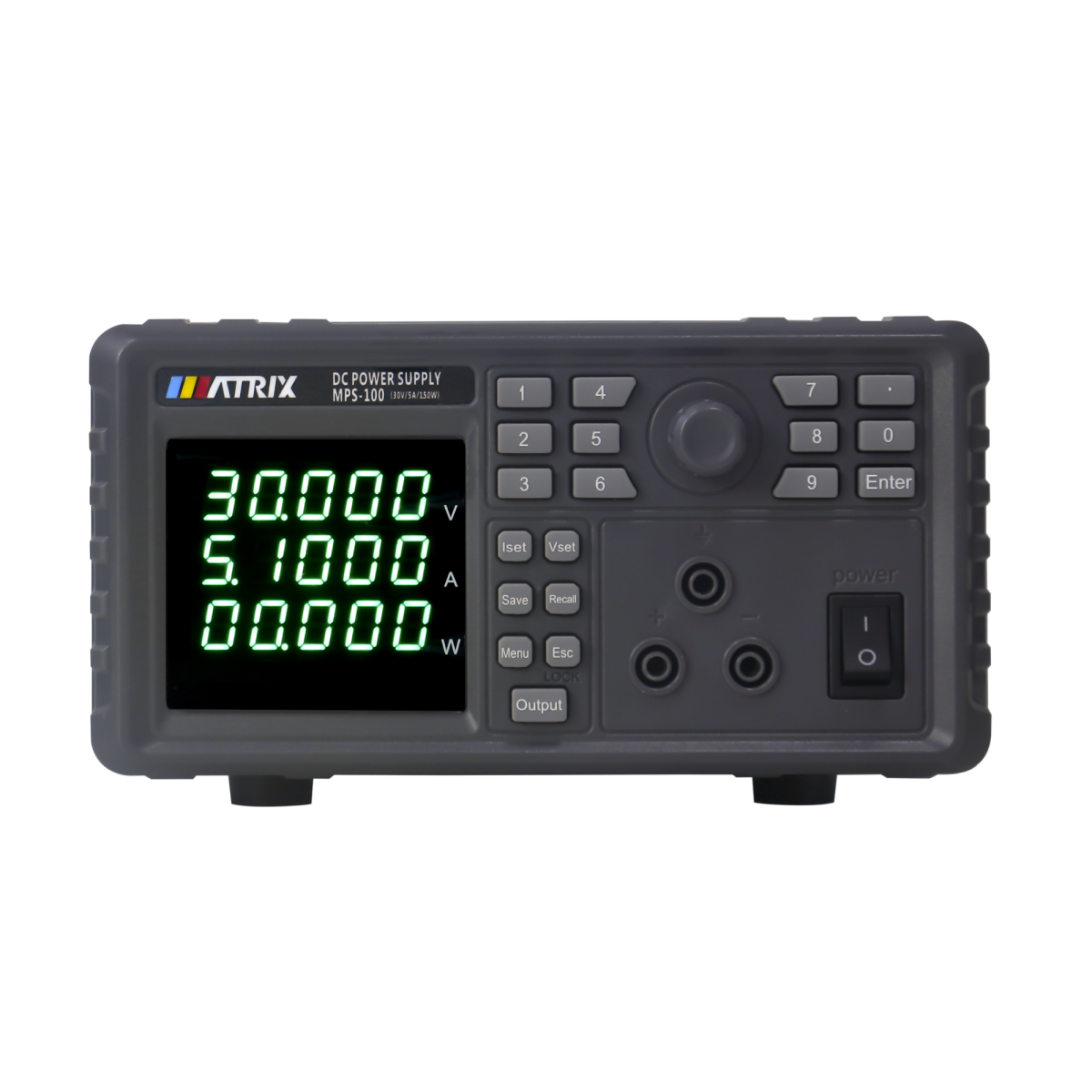
The MPS-100 Series answers with a pure linear regulated architecture, which keeps switching artifacts out of the measurement loop. On the front panel, setting and readback resolution reach 1 mV for voltage and 0.1 mA for current, so small changes in a circuit’s operating point are visible immediately on the LED display windows.
Voltage ripple and noise on the DC output
Current ripple and noise for quiet current delivery
Voltage and current set / readback resolution
If your lab bench is used for precision analog, sensor, or low-power RF work, specify the linear MPS-100 (30 V / 5 A) or MPS-101 (60 V / 3 A). Ripple and resolution matter more than raw watts at this stage of development.
Building a Repeatable Automated Test
The engineering challenge
Production test engineers are judged on consistency: operator A and operator B, shift 1 and shift 9, should produce identical stimulus. Manually turning knobs between units invites drift, mis-typed limits, and slow changeovers.
The MPS-100 Series removes the guesswork with a four-step workflow that can be locked down per product variant and recalled instantly from the instrument’s memory.
Save the group
Store voltage, current, and protection parameters in one of 9 groups of common parameter storage for fast recall.
Program the list
Build a list-sequence output of up to 10 steps to sweep or step through the test profile.
Set the cycle count
Loop the 10-step sequence from 0 to 9,999 cycles so every unit sees the same stimulus count.
Trigger & read back
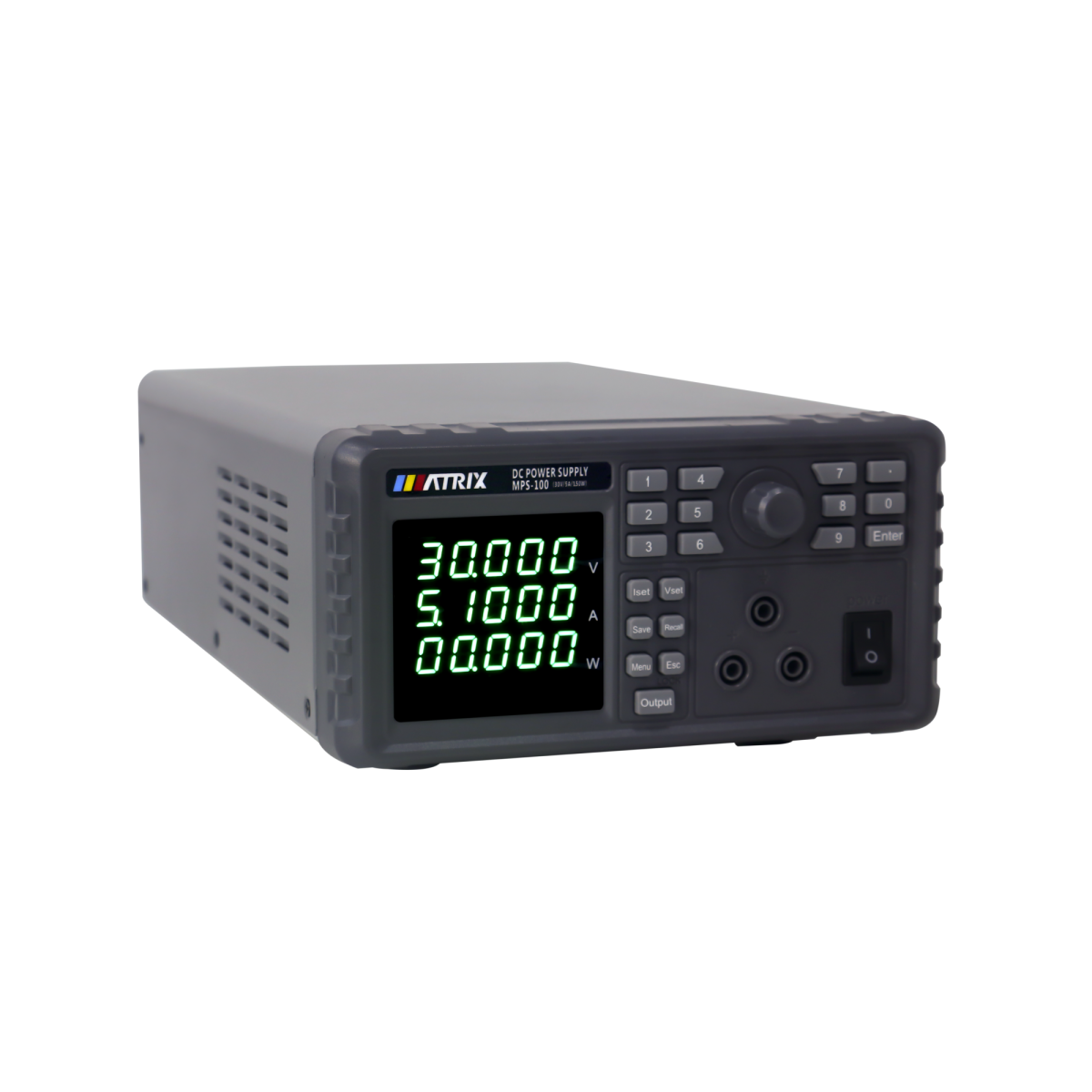
Control the run and capture readback remotely over RS-232 or RS-485.
RS-485
SCPI
MODBUS
On the MPS-100C and MPS-101C, RS-232 and RS-485 communication interfaces come standard, with SCPI and MODBUS protocol support for integration into existing test software. Basic models can be optionally fitted with an RS-232 interface plus a SENSE function when remote readback or output sensing is needed later.
If a test rack must talk to a PC, PLC, or production scheduler, choose the “C” model to avoid retrofitting later. If the supply is only set once at the start of a shift, a basic model with optional RS-232 keeps cost under control while preserving the same linear output quality.
Clear Readouts and Safe Operation for Student Labs
The engineering challenge
In a full classroom, students rotate through benches quickly. They need to see exactly what the supply is doing, adjust set points without accidental jumps, and — most importantly — be protected when they connect a circuit incorrectly.
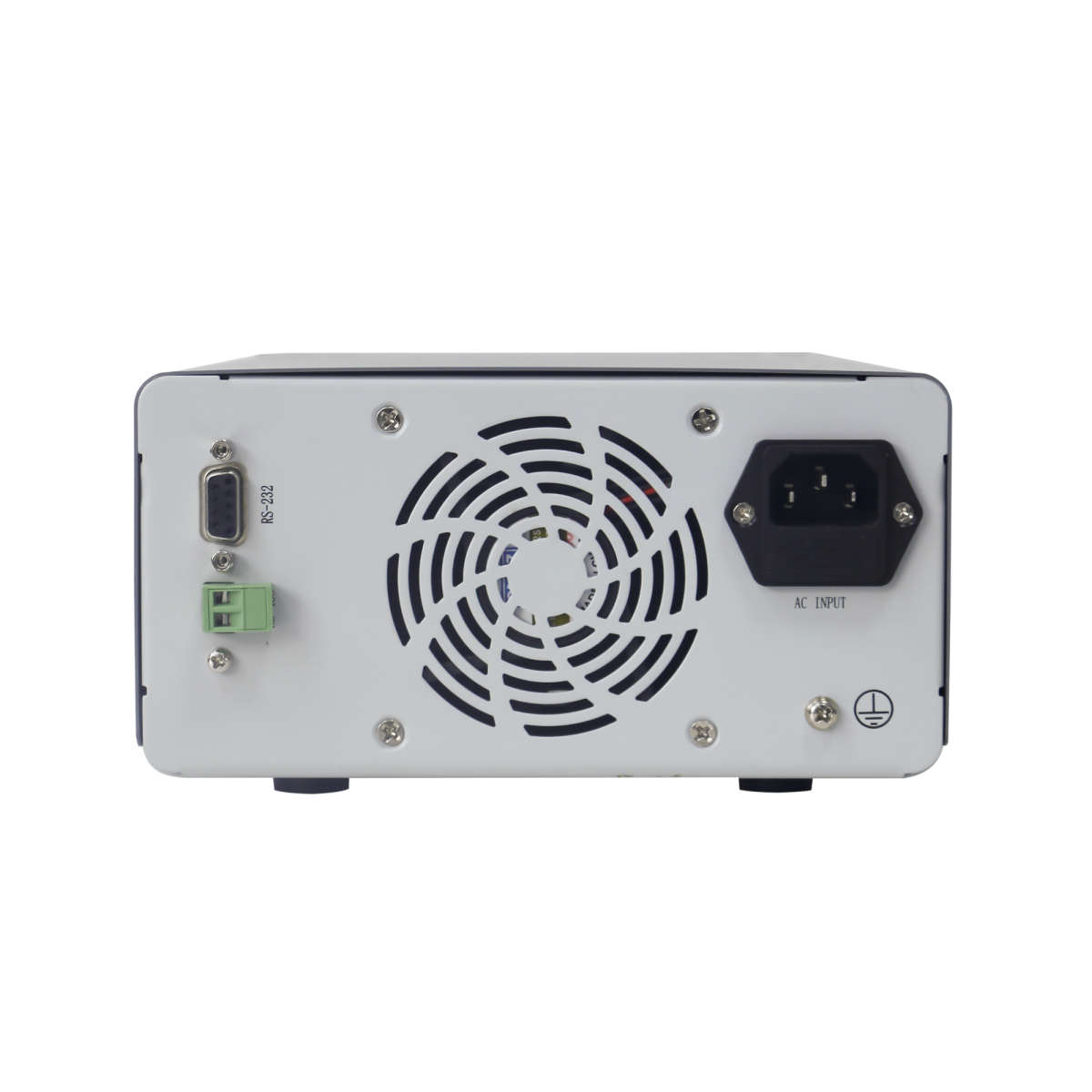
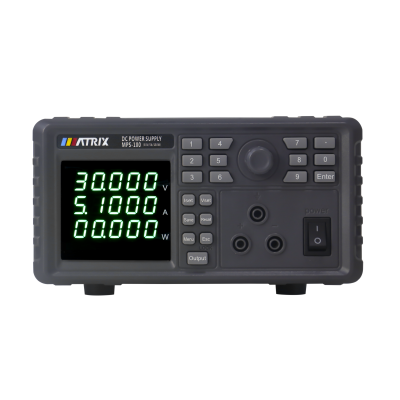
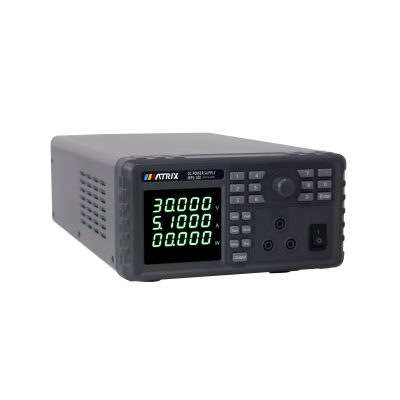
Every MPS-100 model presents five groups of high-precision LED display windows that show voltage, current, and power at the same time, so a student can verify the operating state before touching the circuit. A numeric keypad plus an encoder adjustment knob with anti-misadjustment protection prevents settings from drifting when several people share one workstation.
- Built-in triple protection: OVP, OCP, and OTP.
- Compact body of 185 × 105 × 295 mm and 4.5 kg net weight fit crowded benches.
- Rated input AC220V ±10% or AC110V ±10% makes lab installation planning easier.
For a teaching lab that runs standard electronics experiments, the MPS-100 covers most low-voltage exercises and keeps bench complexity low. The visible readouts and protective limits reduce instructor supervision load during practical sessions.
Unattended Cycling with Protection for Long Runs
The engineering challenge
Aging and burn-in tests run for hours or days with fewer interruptions from staff. The power supply must hold its programming, cycle faithfully, stay cool under continuous load, and shut down safely if the device under test fails — all without a technician watching every minute.
The MPS-100 Series is engineered for that profile. Its list-sequence output of up to 10 steps can be repeated from 0 to 9,999 cycles, which suits long endurance profiles where the same voltage/current pattern must repeat unattended. The built-in OVP, OCP, and OTP protection create a safety layer around the device under test, while an intelligent temperature-controlled fan adjusts cooling as the rack warms up.
repeatable list-sequence cycles
triple protection for unattended racks
temperature-controlled internal cooling
Confirm your endurance profile fits the rated operating environment — the unit is specified for 0–40 °C ambient at ≤85% humidity. If the run needs remote supervision or data logging, pick the “C” model so the sequence can be started and monitored over the serial bus.
Request a Configuration Quote for Your Bench or Production Rack
Matrix does not run an online checkout for this series — every MPS-100 order is confirmed against your application. Tell us the rail voltage, current profile, number of units, and communication bus you plan to use, and the team will confirm the right model and any custom configuration options.
- Custom configuration requests are handled directly by Matrix applications support.
- Multi-unit lab and production quotes can be discussed in one inquiry.
- Include “MPS-100 Series” and your product ID so the response is routed correctly.
What Matrix needs to build your quote
- Required DC voltage rail(s) — 30 V or 60 V class
- Current load at each set point
- Number of benches or rack positions
- Remote control bus preference: RS-232 or RS-485
- Special requests: SENSE option, custom labeling, accessories
Related Products
Keep adjacent product options together for a faster catalog comparison.
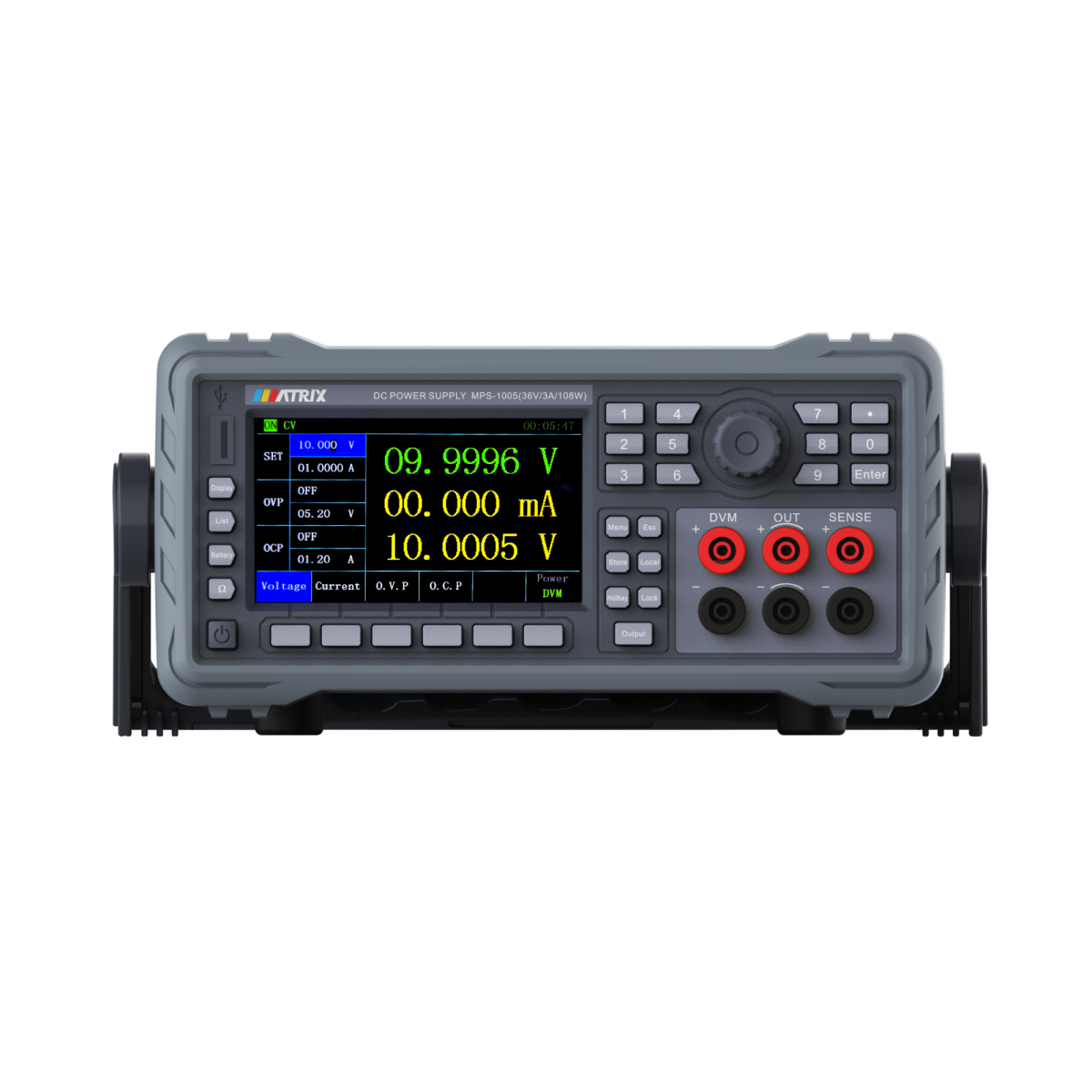
MPS-1000 Series High-Precision Programmable DC Power Supply
Explore this related product option and its published details.
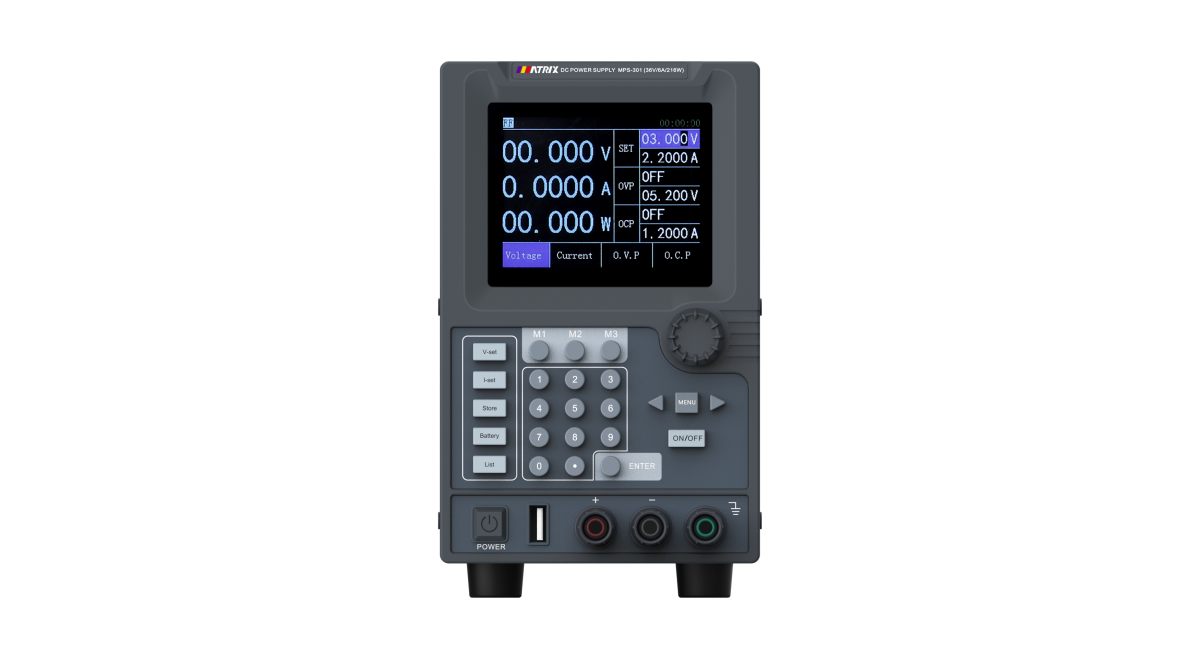
MPS-300 Series Single-Channel Programmable DC Power Supplies
Explore this related product option and its published details.
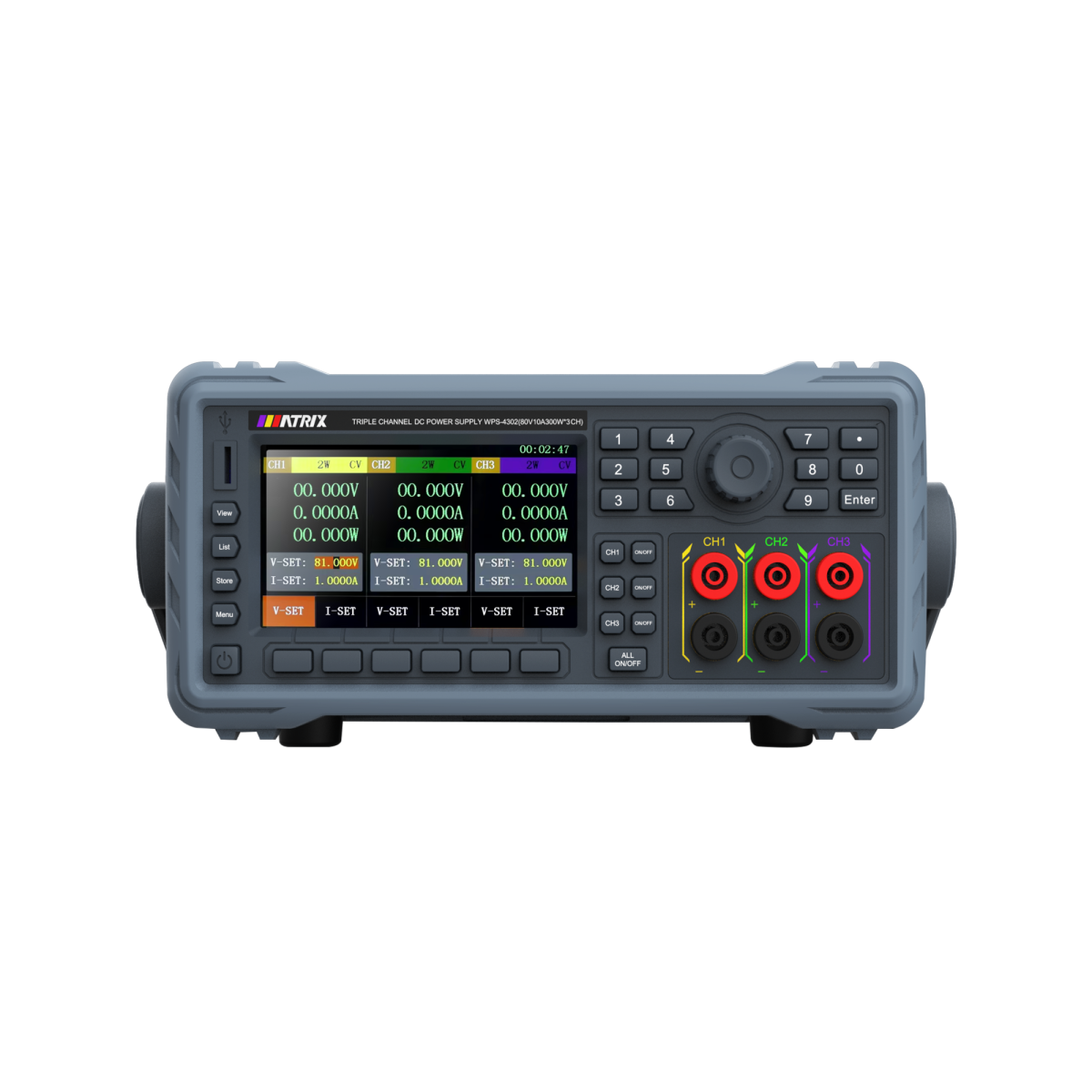
WPS-4300 Series 3-Channel DC Power Supplies
Explore this related product option and its published details.
Frequently Asked Questions
What information is shown for this product?
Review the product details, images, and specifications presented on the official product page.
Where can I check the intended application?
Use the application and use-case information published on the official product page.
Which specifications should I confirm before ordering?
Confirm the specifications and options listed for the exact product variant before placing an order.
Where can I check available options?
Check the official product page or ask the supplier about options shown for the selected product.
How can I request product information?
Use the official contact or inquiry path provided on the site.
What should I include in an inquiry?
Include the product page, intended use, required quantity, and any specifications you need the supplier to review.